The Daily Shooters
The 35mm SLR (Single Lens Reflex) was the backbone of 20th-century photography. Built from brass, steel, and finely tuned springs, these cameras operated entirely without batteries for decades.
Mechanical Engineering in Miniature
The core mechanism of a classic 35mm SLR involves a reflex mirror and a focal plane shutter. When the shutter release is pressed, a complex sequence of mechanical events unfolds in a fraction of a second:
- The aperture diaphragm stops down to the selected f-stop via a lever interface.
- The reflex mirror flips up out of the light path.
- The first shutter curtain travels across the film plane.
- After a mechanically timed delay (regulated by an escapement gear train), the second curtain follows.
- The mirror drops back down, and the aperture re-opens.
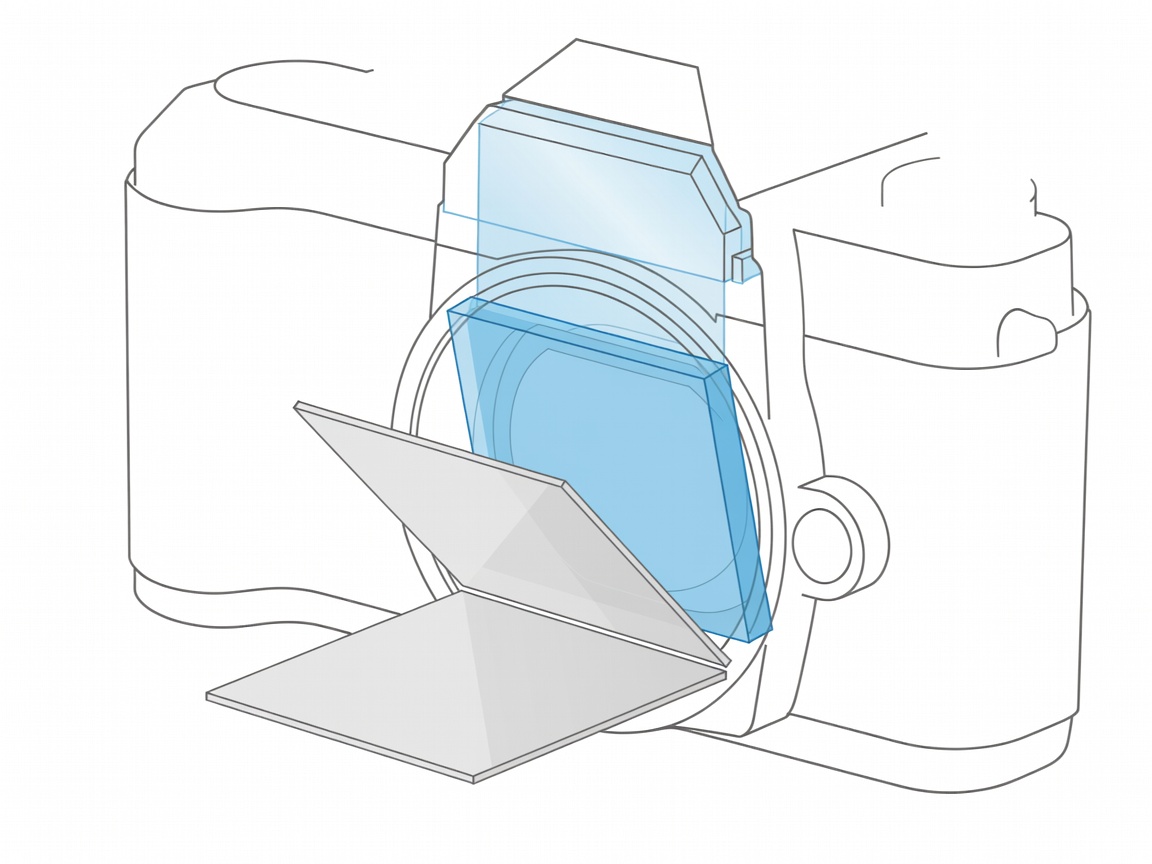
Legendary 35mm Chassis
Notable models include the Nikon F, introduced in 1959, which established the modular professional system. Photographers could swap pentaprisms and focusing screens. The Olympus OM-1 later challenged the industry with its incredibly compact footprint without sacrificing the robust brass gearing.
These cameras relied heavily on clockwork escapements for slow shutter speeds (1 second to 1/30th), emitting a distinct mechanical whir that digital cameras can only simulate.